
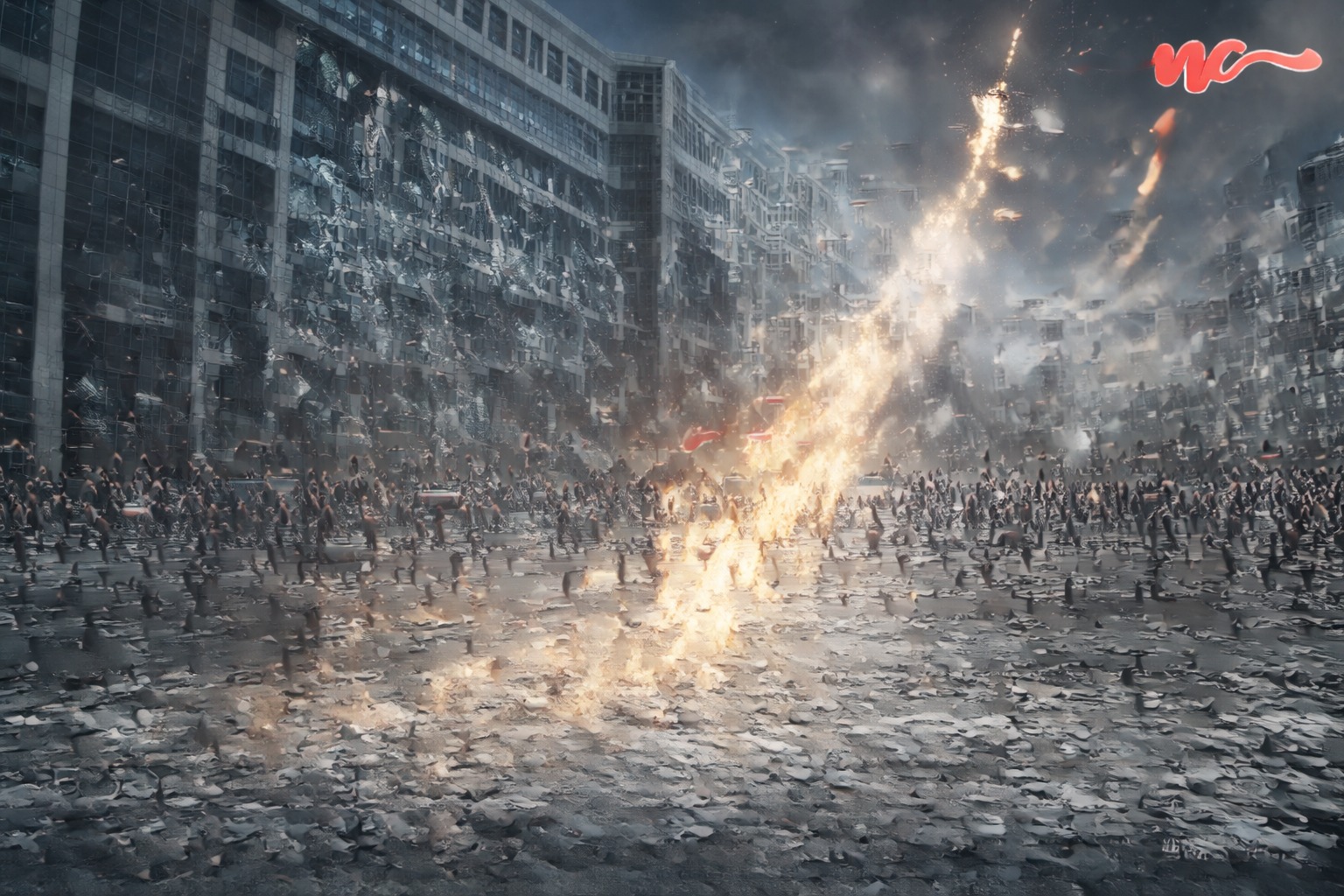
Dubai’s financial district took a hit Friday morning. Drone debris punched through windows at the Dubai International Financial Centre. Smoke rose thick over the skyline. It was the second such incident in under 24 hours.
As @wublockchain reported on X, the DIFC was struck by debris from an intercepted Iranian drone. Windows were shattered. Smoke billowed from the building. The centre hosts blockchain firms, fintech startups, and some of the world’s largest banks.
The Dubai Government Media Office confirmed the hit. Fragments from a successful aerial interception caused minor facade damage to a building in central Dubai. No injuries were reported.
You might also like: Saudi Aramco Cuts Oil Output After Hormuz Gets Blockaded
When the Smoke Clears, the Numbers Are Worse
The DIFC is not a peripheral address. By end of 2025, it hosted over 8,800 registered companies. Its tenants include Citi, PIMCO, Warburg Pincus, and Allianz Trade, and financial services firms there account for more than half of all FDI flowing into Dubai.
Employees at Citi offices in the DIFC were asked to evacuate. PwC closed offices across Saudi Arabia, Qatar, the UAE, and Kuwait. Deloitte also told DIFC staff to vacate. This was before Friday’s strike.
The ICD Brookfield building, home to BlackRock, Bank of America, JPMorgan, EY, and BNP Paribas, sits usually packed with bankers. It was empty.
Must read: Binance Beats Terror Lawsuit. What the Judge Actually Said
The Blockchain Side Nobody Covered
The DIFC is where much of the Gulf’s blockchain sector operates. The Dubai Blockchain Center sits inside it. It works with government bodies, academic institutions, and private companies involved in digital asset development, providing training and research on distributed ledger technology.
Dubai had spent years building its crypto and blockchain reputation. Supportive regulation pulled in startups. International firms set up regional blockchain operations there. That position is now under direct pressure.
Visible damage appeared on upper floors of the DIFC Innovation One tower. Broken windows and punctured exterior panels were seen along several floors.
Related: Why Stablecoins, AI Payments, and RWAs Are Defining the New Web3 Era
Iran Named the Target Before Striking
This was not random. Iran had reportedly targeted economic and financial assets it associates with the United States and Israel since Wednesday, in retaliation for earlier strikes on facilities connected to Iran’s state-owned lender Bank Sepah in Tehran.
Iran’s military had explicitly threatened banks and economic centres across the Gulf. That threat came days before debris hit the DIFC Innovation Hub. Firms did not wait. They moved staff out before Friday morning.
The UAE’s air defenses have intercepted more than 1,500 Iranian drones and nearly 300 missiles since the conflict began. Bangladesh Sangbad Sangstha More than any other country in the region. But interception does not mean safe. Debris from intercepted drones still falls.
The Financial Times reported on the wider economic pressure gripping Dubai as the conflict deepens. The full report is available .
Also on your radar: Pakistan Just Legalized Crypto for 260 Million People
Dubai Is Still Open. But the Cracks Show
The DIFC confirmed full operational availability. Dubai’s government held its “business as usual” posture publicly. Authorities confirmed no injuries were reported at the DIFC or an adjacent Dubai Marina site, where a second debris incident occurred the same morning.
Still, the image took damage too. Gulf expert Cinzia Bianco from the European Council on Foreign Relations said what many investors were thinking. She said this was Dubai’s worst nightmare because its entire appeal depended on being a safe oasis in a troubled region, and that resilience was possible but there was no going back.
The UAE Capital Markets Authority had already shut both the Dubai Financial Market and Abu Dhabi Securities Exchange on March 2 and 3, halting trading in assets worth over $1.1 trillion. When markets reopened, the DFM dropped approximately 4.7 per cent in a single day.
The blockchain sector has no direct trading floor to close. But its offices sit inside the same buildings. And the buildings are taking hits.
This article was created by News Coverage Agency, the best PR agency helping all firms in getting access to media.