

A CoinMarketCap listing looks simple from the outside. Submit a form, wait, get listed. The actual process runs slower and stricter than that, and an entire scam industry has grown up around projects impatient for the wait to end.
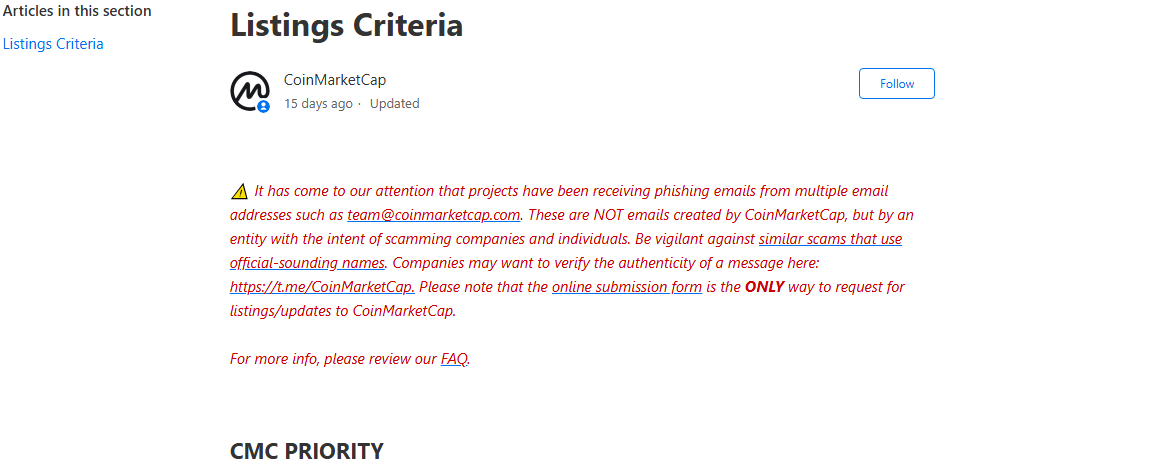
CoinMarketCap Listing Scams Are a Real, Named Problem
CoinMarketCap’s own support page carries a live warning about phishing emails. They come from addresses that look official, sent by people with no real connection to the platform. Each one promises to speed up or guarantee a listing. Attempting to bribe CMC staff, per the same page, gets a project blacklisted entirely. Any inbound message offering a shortcut through this process is worth treating as a red flag first.
The Official Submission Form Is the Only Real Path
CoinMarketCap states plainly that its online submission form is the only legitimate way to request a listing or update. A fast-track option does exist, called CMC Priority. It runs directly through CoinMarketCap itself, with a published price and terms. Anything routed through a third party claiming special access outside that channel isn’t official, whatever it calls itself.
CoinGecko runs a similarly form-based, no-shortcuts process on its own platform. The pattern holds across both major trackers: legitimate speed comes from meeting the stated criteria cleanly, not from finding a side door.
What Actually Speeds Up Review on Both Platforms
A complete submission clears review faster than an incomplete one gets a second look. Working contract addresses matter. So does an accurate circulating supply figure, and live trading pairs on exchanges already listed. All of that matters more than anything in the accompanying pitch copy. Reviewers check facts against a blockchain explorer. They don’t read marketing language.
This connects to the same discipline behind keeping a project’s own token claims a step away from securities territory. Nothing trips that faster than overstating a project’s status. Claiming an exchange listing that’s still pending, or describing a token as already trading somewhere it isn’t yet, doesn’t just risk a compliance problem. It also tends to get a listing application flagged and delayed.
CoinMarketCap submission readiness
Check every item before you submit.
A Tracker Listing Isn’t the Same as an Exchange Listing
Getting listed on a price tracker gives a project visibility and a real circulating-supply record. It says nothing about actual trading access, a separate, harder process covered by the real timeline behind getting onto a major exchange. Projects sometimes announce a tracker listing as though it were equivalent to an exchange listing. Reporters who know the difference tend to notice the conflation.
Untangling a tracker listing from a real exchange listing in a project’s own messaging is a small thing News Coverage Agency catches constantly. Message the team before that mix-up ends up in your own press materials.