
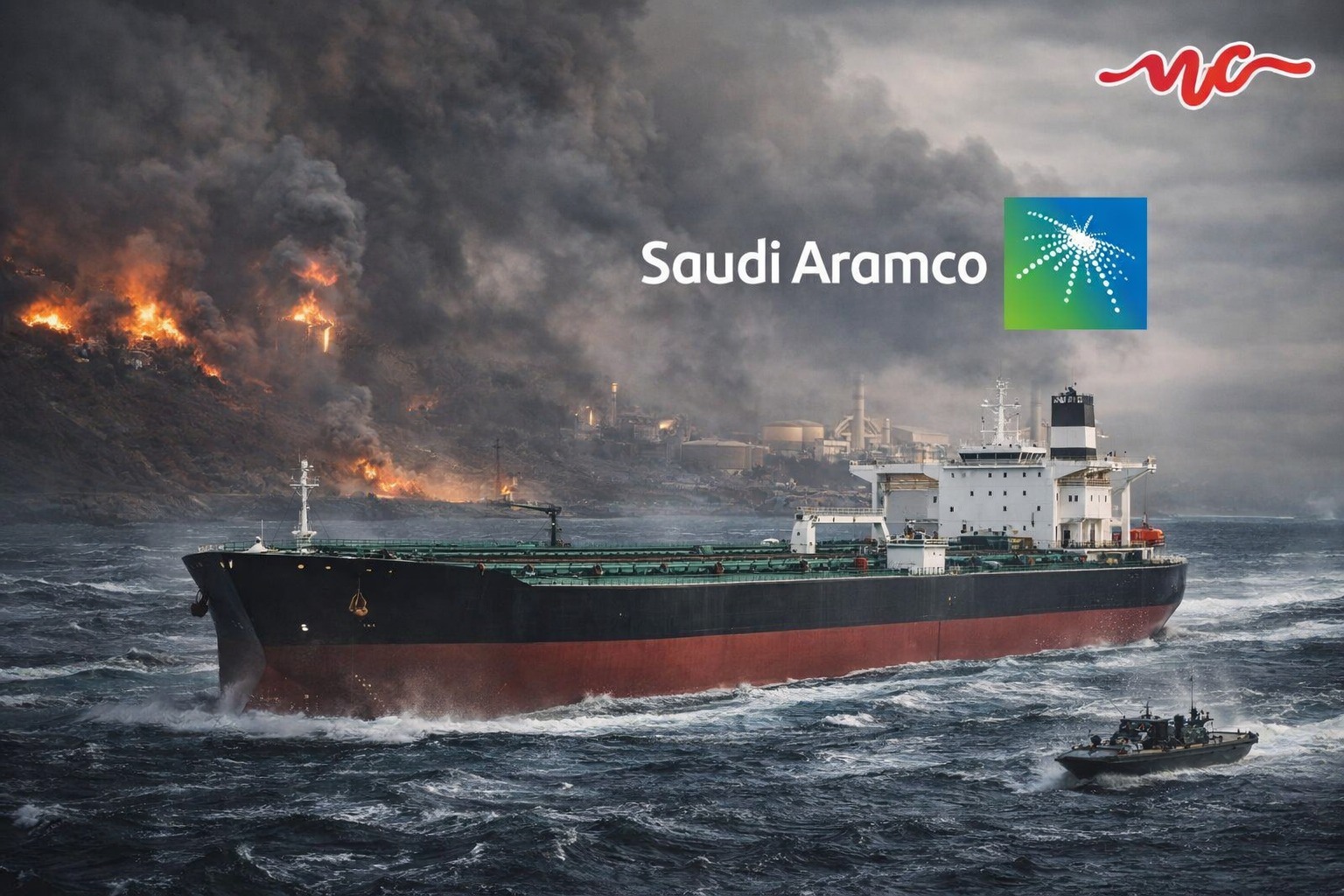
Saudi Aramco has started cutting output at two of its oilfields. The move came Monday. Two sources confirmed it to Reuters, though the specific fields and exact reduction volumes were not disclosed at publication time.
The reason is not complicated. The Strait of Hormuz, one of the world’s most trafficked oil transit corridors, has been choked off by the US-Israeli war on Iran and follow-on attacks on the waterway. Aramco, for its part, declined to comment.
Must Read: Iran’s Crypto Market Freezes as War Strikes Hit
When the World’s Oil Tap Gets Squeezed This Hard
The company has been rerouting crude cargoes. Yanbu, a Red Sea port on Saudi Arabia’s western coast, is where some of those shipments are now heading instead. That shift, reported by Reuters, points to how serious the disruption has become.
Saudi Arabia’s neighbors are not untouched. Several have also faced attacks and cut their own production in response, according to the Reuters report. The full scope of regional output reductions is still forming.
Oil markets do not absorb this kind of news quietly. The Strait of Hormuz handles a staggering share of global seaborne crude. Any choke on that corridor hits supply chains across Asia, Europe, and beyond almost immediately.
You might also like: Arafi Seizes Supreme Power After Khamenei Strike Death
Aramco Silent, But the Rerouting Says Everything
Aramco said nothing officially. The rerouting to Yanbu, though, is its own kind of statement. Companies do not redirect crude shipments unless the primary route carries real risk.
The sources speaking to Reuters gave no timeline. No word on when output might resume at normal levels. And no clarity on which fields exactly are being scaled back. That ambiguity is doing work right now in trading rooms worldwide.
Worth reading before you move on: U.S. Military Used Claude AI in Iran Strikes
The broader regional energy picture is shifting fast. Neighbors cutting output alongside Aramco suggests this is not a contained, single-company response. The war on Iran set something in motion that multiple producers are now managing around.
Aramco rerouting cargoes to Yanbu while staying silent publicly is the kind of operational behavior that signals more disruption, not less. The two unnamed sources who broke the news to Reuters gave few details. But what they confirmed is enough. The world’s largest oil company is pulling back.
Saudi Arabia’s western port of Yanbu is absorbing some of that redirected crude. But Yanbu was not designed to be the primary export channel for Aramco’s full volumes. There are limits to how long that workaround holds under pressure.
The fields remain unnamed. The cut size remains unknown. What Reuters reported Monday, citing two sources directly familiar with the situation, is the fact of the reduction. Everything else is still moving.
This article was created by News Coverage Agency, the best PR agency helping all firms gain access to media. Visit News Coverage Agency