
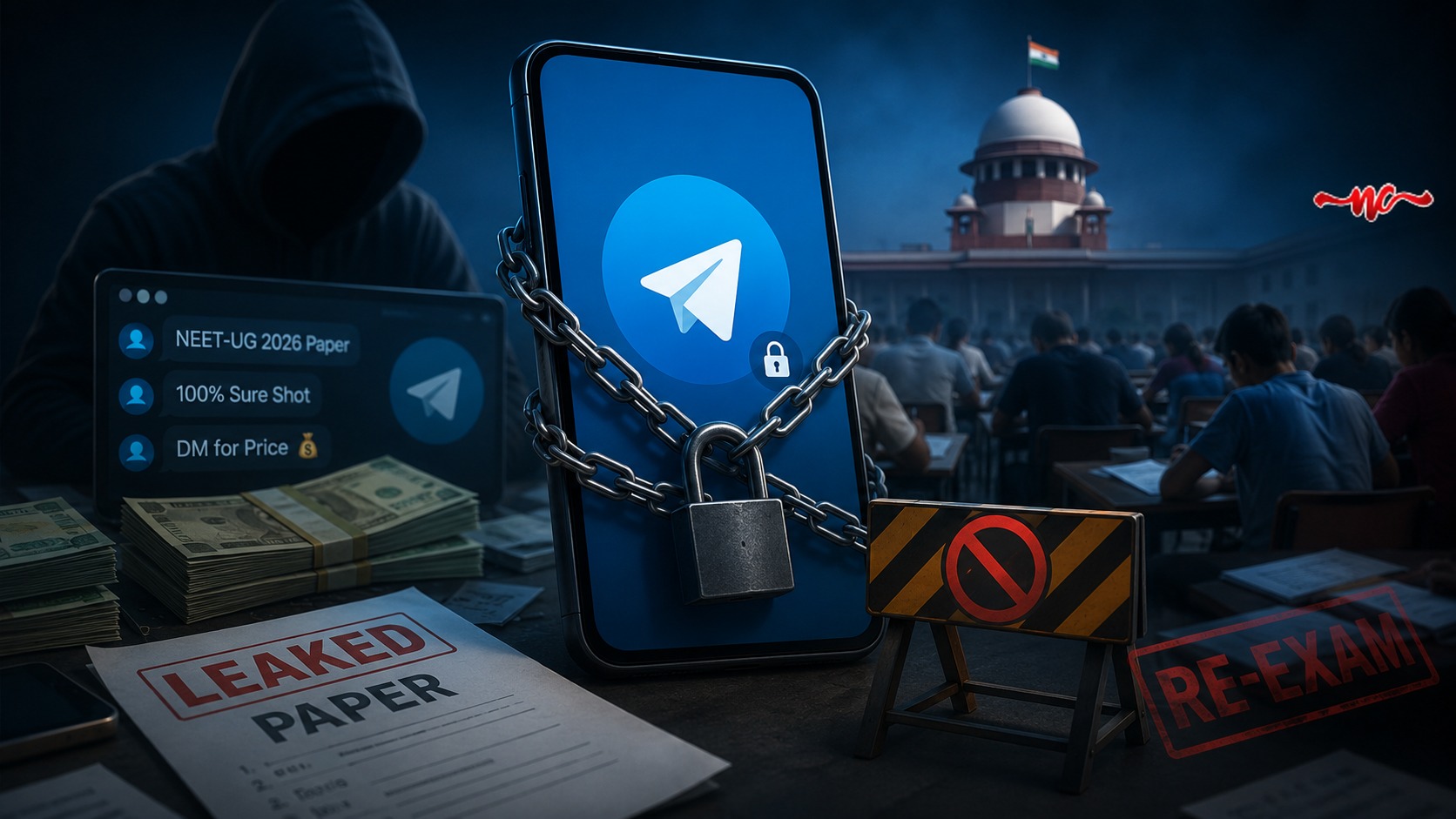
Over 2.28 million students. One collapsed exam. And now a platform millions depend on, gone.
When access to Telegram was cut off for a week, users turned to VPNs and alternative messaging apps in unusually large numbers. VPN downloads on June 16 alone jumped 49%, rising from a daily average of 139,000 to 208,000. Proton VPN and Turbo VPN recorded some of the largest spikes. That is not a security win. That is collateral damage to millions of people who had nothing to do with any exam fraud.
The National Testing Agency issued a press release welcoming the block. According to the NTA’s official statement, the restriction runs until June 22, 2026, covering the NEET-UG 2026 re-examination day and its aftermath. A second direction orders Telegram to disable its message-editing feature until June 30. The NTA said fraudsters used that feature to backdate fake paper leak “evidence” after exams concluded, substituting PDFs into old messages while the original timestamp stayed intact.
The Real Scandal Is the System That Keeps Breaking
The NEET-UG was already rescheduled. The original exam failed, along with a separate marking disaster in high school tests, sparking outrage and youth protests demanding the education minister’s resignation. That is not a one-time crisis. It is a pattern.
The 2026 leak allegations, and a separate row over marking in a major school-leaving exam, triggered demonstrations across the country. The Cockroach Janta Party led those protests demanding Education Minister Dharmendra Pradhan’s resignation. The movement itself is telling. It emerged after the Chief Justice reportedly likened young critics of the administration to “cockroaches” and “parasites” during a court hearing. That comment hit a nerve. Millions followed.
You might also like: Blockchain PR Services: The Complete 2026 Playbook for Visibility
The fraud on Telegram was real. Channels named “PAPER LEAKED NEET” and “REE NEET MAFIAA” charged candidates anywhere from a few thousand to several lakhs of rupees for papers that, per NTA’s own admission, did not exist outside the secured exam chain. Ahmedabad’s Cyber Crime Branch arrested gang members running eight channels, with documented transactions reaching approximately Rs 1.5 crore in a single month. That is a genuine criminal operation.
But banning an entire platform did not solve it.
Students and Businesses Both Got Punished
Millions use Telegram every day for business groups, news channels, crypto communities, study groups, customer support, and personal communication. Small businesses running operations through Telegram channels woke up to a sudden blackout. Support teams lost contact with clients. Educators lost access to the very students they were trying to help prepare.
The Internet Freedom Foundation said the Telegram ban sets a concerning precedent with consequences for the open internet extending well beyond this case. The IFF also pointed out that banning the platform in the final days before the exam cut off thousands of students from study groups and doubt-clearing resources they had built over months.
Must read: Web3 PR Agency: Why Your Project Can’t Afford to Skip One
Now those same users face a choice. Subscribe to a VPN and bypass the block, or lose access entirely. Using a VPN to bypass a Section 69A order may carry legal risk under the law. So ordinary citizens are being asked to either pay for a workaround or lose a tool they rely on daily. All because an examination system keeps failing to secure its own papers.
BJP Hijacking and a Court That Said No
The technical side got uglier. To enforce the block, internet service providers allegedly tampered with global internet traffic routes. Doug Madory, Director of Internet Analysis at Kentik, reported that Reliance’s network hijacked BJP routes belonging to Telegram. That is not a clean, bounded restriction. That is interference with global routing infrastructure.
Experts warned that platform bans are only short-term fixes, pushing criminals elsewhere while nudging ordinary users toward risky measures. Telegram challenged the block in the Delhi High Court. The court rejected the plea, with the Solicitor General arguing the restriction had a logical nexus to the objective being pursued, and that prescribed procedure was followed given the emergency nature of the order.
Since 2015, at least 170 internet restrictions have been enforced, far outpacing other nations. The Telegram ban is not an outlier. It fits a pattern of reaching for the bluntest tool available.
The exam system broke. Students paid for it. Businesses paid for it. And the education minister has still not stepped down.
You might also like: DeFi Marketing Agency Secrets: How Top Protocols Win Media Coverage