
Crypto PR email subject lines get judged fast, often in about six words on a phone. A reporter scanning an inbox decides before reading anything else. The subject line carries the whole first impression of the pitch.
The best public dataset is BuzzStream’s analysis of more than 6 million subject lines from digital PR campaigns, last updated September 24, 2026. It isn’t crypto-specific, and its author notes concern that open rates may be inflated by Apple’s privacy features and Gmail image caching. Read the numbers as direction, not law.
Length and Structure for Crypto PR Email Subject Lines
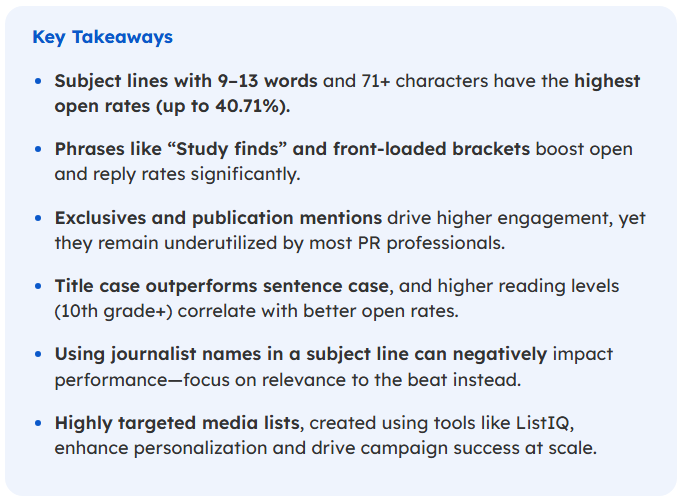
Length first. The study found 9 to 13 words earned a 40.20% open rate, barely ahead of 14 to 30 words at 39.97%. By characters, 71 or more did best at 40.71%. Short subject lines saw a spike in replies, but they made up only 1.48% of the sample.
The catch is display. BuzzStream’s table shows Gmail on a phone cutting off near 37 characters, around six words. Desktop Gmail shows about 88, and desktop Outlook about 51. Put the important words first, because many reporters will read only the opening.
Structure helped more than length. Subject lines that led with a bracket saw 52.08% opens and a 2.24% reply rate. Ending with a bracket did nearly as well, at 49.42% and 1.60%. The brackets may work as a visual cue in a crowded inbox.
Subject Line Patterns That Work on Reporters
Phrases matter too. Study finds led the phrase list at nearly 41% opens and a 1.25% reply rate, with data reveals at 37.55%. Crypto teams usually hold exactly that kind of material, onchain figures and original research, but they bury it under a product name.
Exclusives did best of all. Subject lines mentioning one were opened 54.16% of the time, against 37.16% without, yet only 13.38% of pitches used the word. Naming the publication lifted opens to 50.81% from 39.25%, though only about 1% of senders tried it. For how an exclusive actually works, see setting a clean embargo.
Subject Line Habits That Get Pitches Deleted
Using the reporter’s name in the subject line scored lower, at 38.45%. BuzzStream’s explanation is that it can read as over-personalized and templated. Aim at the beat instead. The author also doesn’t recommend all caps.
The rest is editorial judgment, not data. Vague hype like exciting news adds nothing. Price talk reads as promotion. And a generic partnership announcement tells a reporter nothing about why they should care. What journalists say about pitches backs up the focus on relevance.
Rewrites and Follow-Ups
Here are patterns with placeholders, not real figures. Weak: exciting partnership news from a project. Better: [Exclusive] Stablecoin settlement data on a named chain since a given month. Weak: a funding round announced. Better: [Data] What a protocol’s users did in the week after a launch.
Follow-ups need care. Don’t fake a thread. The FTC’s compliance guide says subject lines must not be deceptive, and starting a first email with Re: could fall into that category. Add a new fact instead, and send it at a different time, using send-window planning to choose when.
Testing Without Burning Contacts
Test crypto PR email subject lines on a small slice of each beat, not the whole list. Vary only one element per test, such as the bracket or the lead phrase. Then judge by replies more than opens, since opens can be inflated. A clean media list makes the slices easy to build, and a full pitching walkthrough covers what comes after the subject line.
Crypto PR email subject lines: pre-send check
Run each subject line through these lines before it goes out.
NCA writes and tests pitch subject lines for crypto announcements and tracks which patterns earn replies. Send your current subject lines for a quick rewrite.