
A token unlock announcement is one of the few crypto notices that readers already expect. Trackers list the date weeks ahead, and holders plan around it. The question isn’t whether people will talk about the cliff. It’s whether the issuer’s version of the facts is there first.
Most guides on the topic are explainers for traders. Few help the team that has to write the notice. This one does, and it sticks to what’s checkable.
Why the Token Unlock Announcement Date Drives the Story
A cliff is a single date when a block of tokens becomes transferable. That makes it a news event with a clock. Reporters and analysts write about it because the date is public, and they’ll quote whatever the project has put on record.
But Sui’s documentation shows the plain version. It says the network’s initial mint carried a one-year cliff, during which initial investors couldn’t transfer their stake, and that the cliff ended in May 2024. It also says total supply is capped at 10 billion SUI, with availability following the designed unlocking schedules.
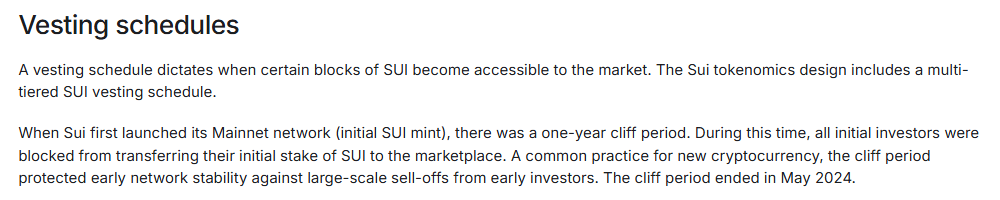
Read it again and the strength is obvious: rule, length, end date, done. Nobody needs a spreadsheet to decode it, which is the whole point. A good token unlock announcement aims for that clarity, and it should link to the full schedule too.
Publish the Vesting Schedule Before Anyone Asks
Put the full schedule on a page you control. Include each allocation, the cliff date, the release pattern and the amount, with its share of total supply. Then link that page from every notice. For the wider story around supply, see how tokenomics gets explained to the press.
Timing matters too. Post the notice early enough that the date isn’t a surprise, but not so early that it’s forgotten. Many teams use two touches. One a few weeks ahead, and one in the final days.
Who Receives Tokens: Team, Investors, Funds
Say plainly which group the tokens belong to. Team, early investors and community funds raise different questions. Investors may sell. A grants fund may be sitting on tokens it plans to award. Treasury tokens might not move at all.
Still, don’t guess about intent. Describe the mechanics, and let holders draw their own conclusions. If a group has agreed to a lockup extension, say so only when it’s public and confirmed. A promise nobody can verify is worse than silence.
Wording That Avoids Price Talk
Leave out any view on price. Don’t write that supply is already priced in, or that the release is nothing to worry about. Those are market opinions. And a notice that sounds like reassurance reads as promotion.
Stick to facts. Dates, amounts, groups, and where the schedule lives. If a number changes, correct it in the open, using the habits in the guide to post-mortem posts. Buyback plans also need care, which the buyback notice guide covers.
Answering Wallet Movement Questions
After the cliff date, people will watch the wallets. Be ready for the question. Name the addresses involved, if you can, and say what has and hasn’t moved. Next, update a pinned message in the community channel instead of replying one by one.
Keep a short Q&A handy, covering what was released, who holds it, whether any of it is staked and where anyone can check. Governance communities expect that openness, asthe DAO communication guide explains, and an investor relations primer covers the formal side.
Token unlock announcement: pre-publish check
Tick each line before the notice goes out.
NCA can draft vesting notices, Q&A sheets and community replies for crypto teams. Send the vesting schedule and ask for a first draft.